
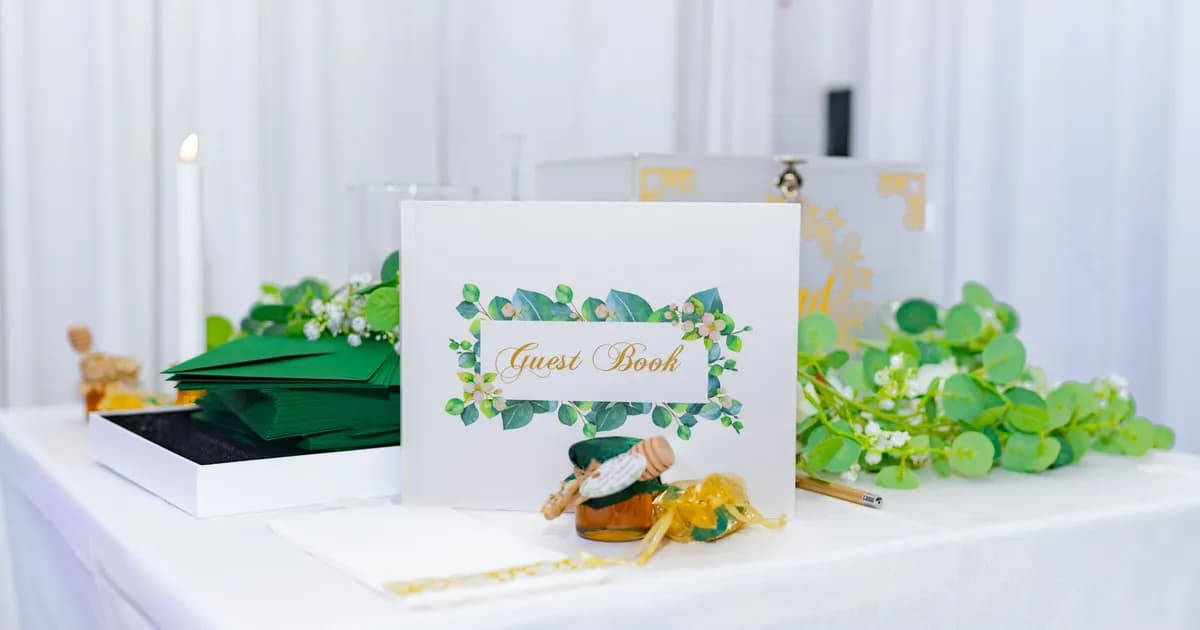
The invitation arrived, you said yes, and now comes the question nobody asks out loud: how much should the gift be? Too little feels cheap, too much strains the budget, and asking the couple is out of the question.
The good news is there is a logic to this, and it does not require guesswork. Below you will find amounts by situation, the method wedding planners actually use, what changes when you bring a plus one, and how to hand over cash without either side feeling weird.
If you are the one getting married, the last section is for you: how to make this easy for your guests.
The short answer
For a typical guest in 2026, the common range is $75 to $150 per person. Close friends and family usually give $150 to $300, and members of the wedding party often go higher.
Those numbers only make sense once you know where they come from, which is what comes next.
The three things that set the number
1. How close you are to the couple
This is the main factor, and it outweighs everything else. Someone who has worked with the groom for two years does not owe the same as the cousin he grew up with.
| Your relationship | Range per person |
|---|---|
| Coworker or acquaintance | $50 to $100 |
| Friend, no great closeness | $75 to $150 |
| Close friend | $150 to $250 |
| Family (aunt, uncle, cousin, sibling) | $200 to $400 |
| Wedding party | $250 and up |
| Parents of the couple | No range, usually folded into helping with the wedding |
2. The kind of wedding
A three-hundred-guest reception with a full catered dinner is a different event from a courthouse ceremony followed by lunch for thirty.
You are not obligated to "cover your plate", by the way. That rule is a myth with half a truth inside it: nobody has to pay for their own attendance. But the scale of the wedding is a useful hint about the standard of the event and helps you calibrate.
3. Your own budget
And here is the rule that beats every table above: a gift should never come out of money you need. A couple who loves you would rather see you at the wedding with a $75 gift than receive $300 and know you went into debt for it.
If money is tight, give what fits and go. Nobody worth your time measures friendship in dollars.
What changes with a plus one
It is not simply double, but it is not the same as going alone either. The common practice is 1.5 to 2 times the individual amount. If you would give $100 on your own, somewhere between $150 and $200 as a couple lands right.
Families with children follow the same logic. Small kids barely move the math; teenagers who eat like adults do.

Cash or a physical gift?
The scale has tipped toward cash in recent years, for a simple reason: most couples getting married today already live together and already have a full kitchen. A third set of towels helps nobody.
Give cash when:
- The couple already lives together.
- They set up cash funds or a registry that accepts contributions.
- You have no idea about their style or their home.
- They have stated a goal, like the honeymoon or a renovation.
Give a physical gift when:
- They built a registry and you find something in your range.
- You know the couple well and know exactly what they want.
- There is a sentimental item that fits your history together.
One shortcut settles the question for good: look at the couple's registry before deciding. It is the official answer. A registry made only of cash funds is a clear signal. So is one with products at several price points.
How to give cash without the awkwardness
The amount matters less than the delivery. Cash handed over carelessly looks like payment; handed over with care, it looks like a gift.
Through the couple's registry. The most comfortable option for both sides. You contribute from your phone, the couple receives it organized and knows who gave what, which makes thank-you notes far easier. No envelope circulating at the reception, no risk of it going missing.
In an envelope on the day. Still works, especially with older guests. Write a card by hand, sign your name, and hand it to the card box or a family member. Never leave it loose on a table.
By direct transfer. Only if the couple pointed you there. An unannounced transfer leaves them guessing who it came from, and among two hundred guests that becomes a real problem.
One thing to avoid: comparing amounts with other guests. That conversation always leaves somebody uncomfortable.
When the invitation says "no gifts"
Some couples write that your presence is the present. That is usually sincere, and you should not feel obligated.
If you still want to give something, three options work well: a smaller amount, a sentimental and inexpensive gift such as a framed photo of you together, or practical help on the day, like driving someone or handling one small detail.
What if you cannot attend?
Gift and attendance are separate things. If you are not going, there is no obligation to send anything.
That said, close friends and family often do. In that case, somewhere between half and two thirds of what you would have given is the common practice. Add a note you actually wrote yourself; it is worth more than the amount.
Getting married? Make this easy for your guests
If you landed here while planning your own wedding, this is the most useful part of the page. Every guest goes through the question you just read. When they cannot find an answer, they do one of two things: give less than they intended, or buy something random that is not on your registry.
What fixes it:
Build a registry with a wide range of prices. Items at $40, $100, $250, and $500. That way the coworker and the maid of honor each find something that fits, without anyone doing math.
Split the expensive items into contributions. The $2,000 sofa becomes twenty contributions of $100. People who can give a little take part, people who can give more take several, and the gift gets covered by the group.
Name your cash funds. "Honeymoon dinner in Rome", "one night at the hotel", "gas money for the road trip" are far warmer than "cash gift". Contributing feels like joining a moment instead of making a transfer.
Put the link on the invitation, not your bank details. One line does it: "RSVP and registry: mywishlist.co/your-list-name".
On MyWishlist you can combine both in the same list: products from any store and cash funds for the bigger goals. Creating and sharing the list is free, with no subscription.
For more, see our guides on starting a wedding registry and, if you already live together, registries for couples who live together.
Frequently asked questions
How much should I give for a wedding gift in 2026? For a typical guest, $75 to $150 per person. Close friends and family usually give $150 to $300, and the wedding party often more. Weigh how close you are to the couple, the scale of the wedding, and above all your own budget.
Do I have to cover the cost of my plate? No. That is a myth. You are not obligated to pay for your own attendance. The cost per guest is only a hint about the style of the wedding, never a bill to settle.
How much should I give if I bring a plus one? Between 1.5 and 2 times what you would give alone. If that is $100, then $150 to $200 as a couple is appropriate.
Is giving cash rude? No, and today it is what most couples prefer, especially those who already live together. What matters is following the route the couple set up, usually the contributions on their registry.
Can I give less than the typical range? Yes. Ranges are references, not rules. A gift that strains your budget is not a gift. Give what fits and write something meaningful.
Do I need to send a gift if I am not attending? There is no obligation. If you are very close and want to send something, half to two thirds of what you would have given while attending is the common practice.
When should the gift be given? Through a registry, anywhere between your RSVP and the week of the wedding. In an envelope, on the day itself. Avoid leaving it for later, since couples usually organize their thank-you notes right after the honeymoon.
Getting married? Start with the registry
The whole "how much should I give" question disappears when the couple makes their wishes clear. A registry with a wide price range and well-named cash funds answers it for every guest at once.
Create your free wedding registry on MyWishlist, add products from any store, set up your cash funds, and share a single link. Your guests will thank you.


